
he attention span of an internet user is now shorter than that of a goldfish. In the world of 2026, “waiting for a website to load” is equivalent to being kept waiting at a shop door for minutes. Most business owners view website speed as merely a “technical detail” for developers to handle. Yet, the reality is this: every 100-millisecond delay in your site’s loading time causes up to a 7% drop in conversion rates. Slowness is the loudest noise—it drowns out your brand’s voice and drives potential customers straight to your competitors.
At Cancel Studio, we cancel code bloat and every element that sabotages website speed performance. We believe that speed is not a luxury, but the very foundation of digital sovereignty. In this guide, we will examine the massive impact of milliseconds on your sales and how to silence the noise of a slow website.
I. Website Speed and User Psychology: The Cost of Waiting
The human brain is programmed to trust systems that respond instantly. If the response time after clicking a button is under 100 milliseconds, the brain perceives it as “instant.” However, once this exceeds 1 second, the user’s focus begins to scatter. Website speed is the first and most critical bond a user establishes with your brand.
1. The Patience Threshold and Abandonment
Research shows that 53% of mobile users abandon a page that takes longer than 3 seconds to load. This means half of your ad budget is thrown away before the customer even sees your site. A slow website is a digital wall built between the user and your brand.
2. The Loss of Trust
A slow-loading site triggers doubts about “security” and “professionalism.” That infinite loading icon on a checkout page forces the customer to wonder: “Does this company have the technological infrastructure to protect my credit card information?”
II. Google's New Standards: Website Speed and Core Web Vitals
Since 2021, Google has treated website speed performance not just as a suggestion, but as a direct ranking factor. These metrics, known as Core Web Vitals, essentially measure the speed noise in the user experience:
LCP (Largest Contentful Paint): How long it takes for the largest image or text block to load. (Goal: Under 2.5 seconds).
INP (Interaction to Next Paint): How long it takes for the browser to provide a visual response when a user clicks a button.
CLS (Cumulative Layout Shift): Whether content jumps around while the page is loading.
III. The Saboteurs of Website Speed Performance
Why does a website slow down? Usually, it’s due to the effort of trying to be “more”:
1. Unoptimized Images
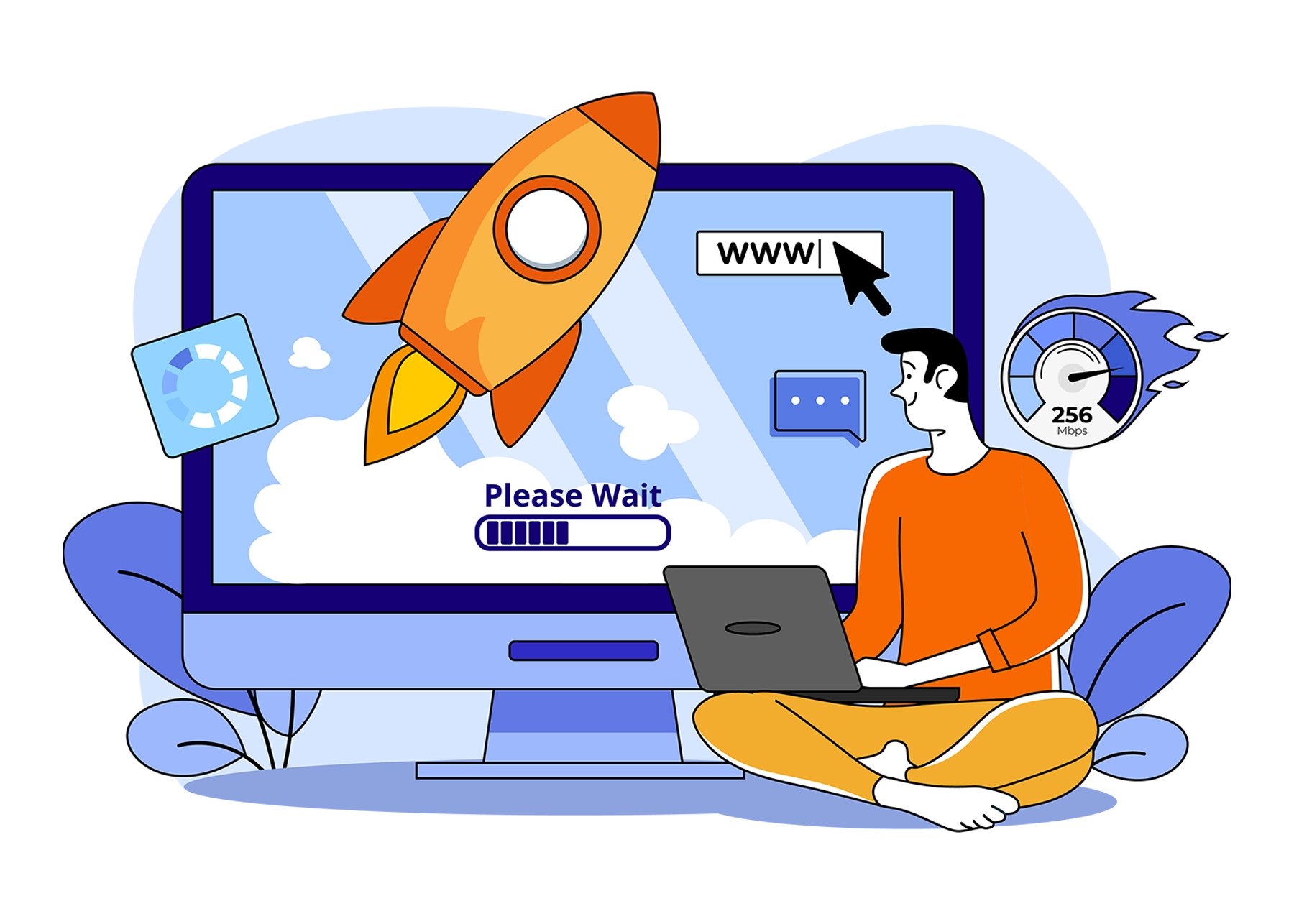
Using a 5 MB image in 4K resolution is sales suicide. Failing to resize images is the heaviest burden on website speed. (Visual Note: An image with the alt-text “website speed optimization graph” should be added here).
2. Third-Party Script Crowding
Every tracking code (pixel), live chat bubble, or unnecessary plugin running on the site adds an extra load to the browser. Every plugin that doesn’t work or produce data is noise.
3. Poor Server Performance and TTFB
No matter how optimized your site is, if your hosting responds to requests later than 1 second (Time to First Byte), you start the race from behind.
IV. The Economics of Milliseconds: The Link Between Website Speed and Sales
Let’s concretize the impact of speed on conversion with an example:
Current Status: 10,000 daily visitors, 2% conversion rate, 500 TL average order value.
The Problem: Website speed is at 4.5 seconds.
The Solution: If you reduce this speed to 2.5 seconds, your conversion rate is statistically expected to increase by 20%. Milliseconds are, quite literally, your profit margin.
V. Why Website Speed is Critical for Mobile Users
More than 70% of users are now on mobile devices. A speed that is “manageable” on a desktop can turn into absolute torture for a mobile user on the move with a 4G or 5G connection. Website speed must be stripped of heavy code that drains a mobile device’s processing power and battery life.
Cancel Studio Approach: We don’t just say “Mobile-First”; we say “Speed-First.” By canceling heavy JavaScript libraries that consume processor power and battery life, we build an experience that flows like silk.
VI. SEO and Website Speed: The Time of Google Bots
Google bots use a “crawl budget” when visiting your site. If your website speed is low, bots can crawl fewer pages within a specific timeframe. This means your new content or updates will enter the Google index much later. Speed is the invisible engine of SEO.
VII. Cancel Technical Debt: Strategies to Increase Website Speed
The acceleration process is not an “installing a plugin” task; it is an act of purification.
Code Cleaning: Strip away unused CSS and JavaScript (Unused Code).
Caching: Entrust static content to the user’s browser or CDN (Content Delivery Network) servers.
Lazy Loading: Content that loads only when needed boosts website speed success.
Font Optimization: Using 5 different web fonts is visual noise. Focus on system fonts or a single, optimized font family.
VIII. Lightning-Fast Conversion with Cancel Studio
We don’t just build “fast-loading” sites; we cancel every technical friction point that prevents the user from taking action. We treat website speed as an engineering art form.
What We Do
Performance Audit: We analyze every single millisecond of your site.
Technical Cleaning: We weed out unnecessary code and bloated structures.
Infrastructure Modernization: We elevate your site to world standards with the fastest server technologies.
Speed is Respect
When you respect your customer’s time, they reciprocate with loyalty to your brand. Website speed is the most honest metric in digital marketing. You are either there, or the user has already pressed the “Back” button. Do not underestimate the power of milliseconds.
Cancel the unnecessary weight. Lighten your code. Bring your site to a speed that races with your user’s speed of thought.
Cancel the Delay. Accelerate the Sales.